Acoustic Atlas
10/14/2021
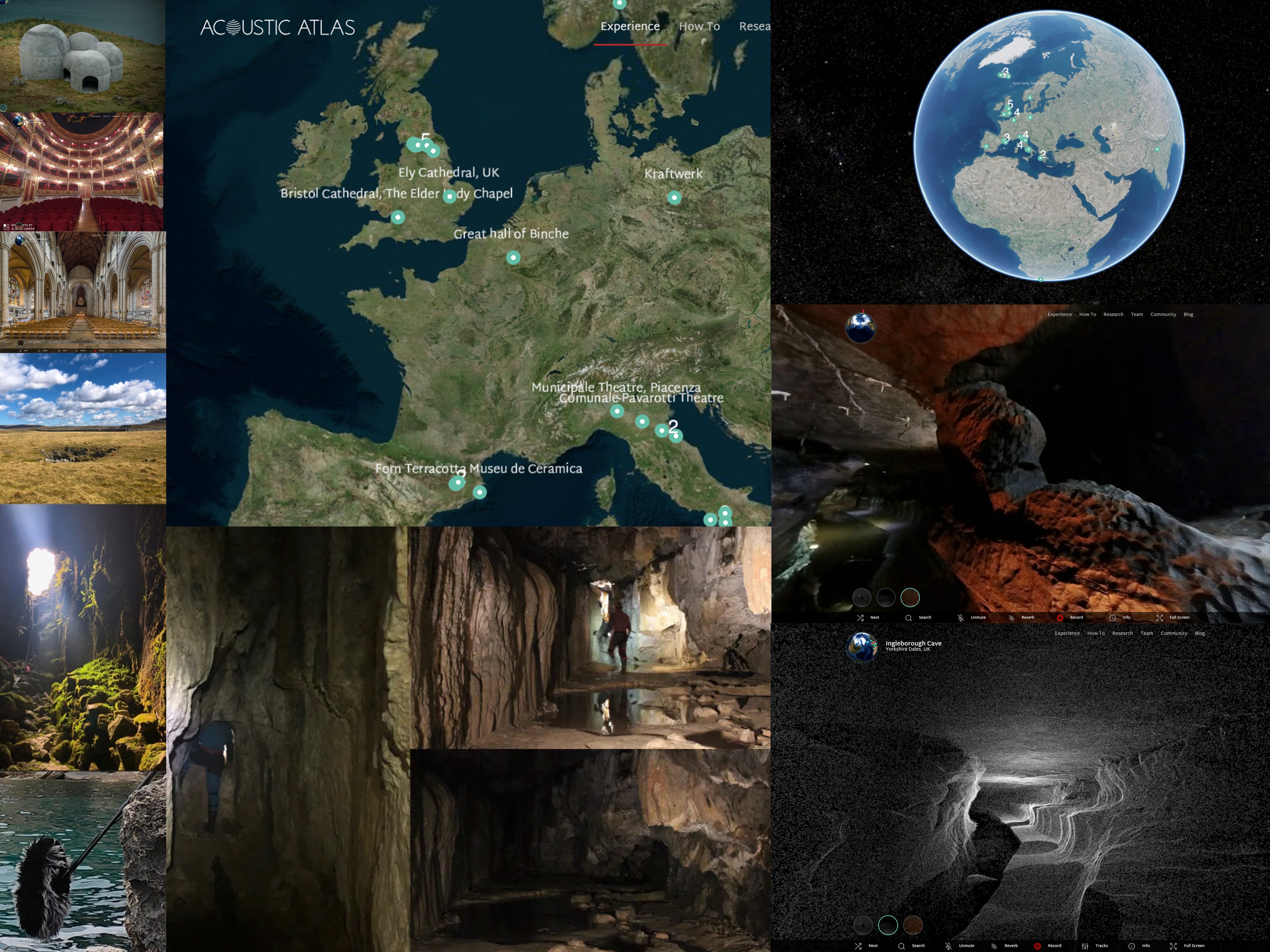

Acoustic Atlas
14 October 2021
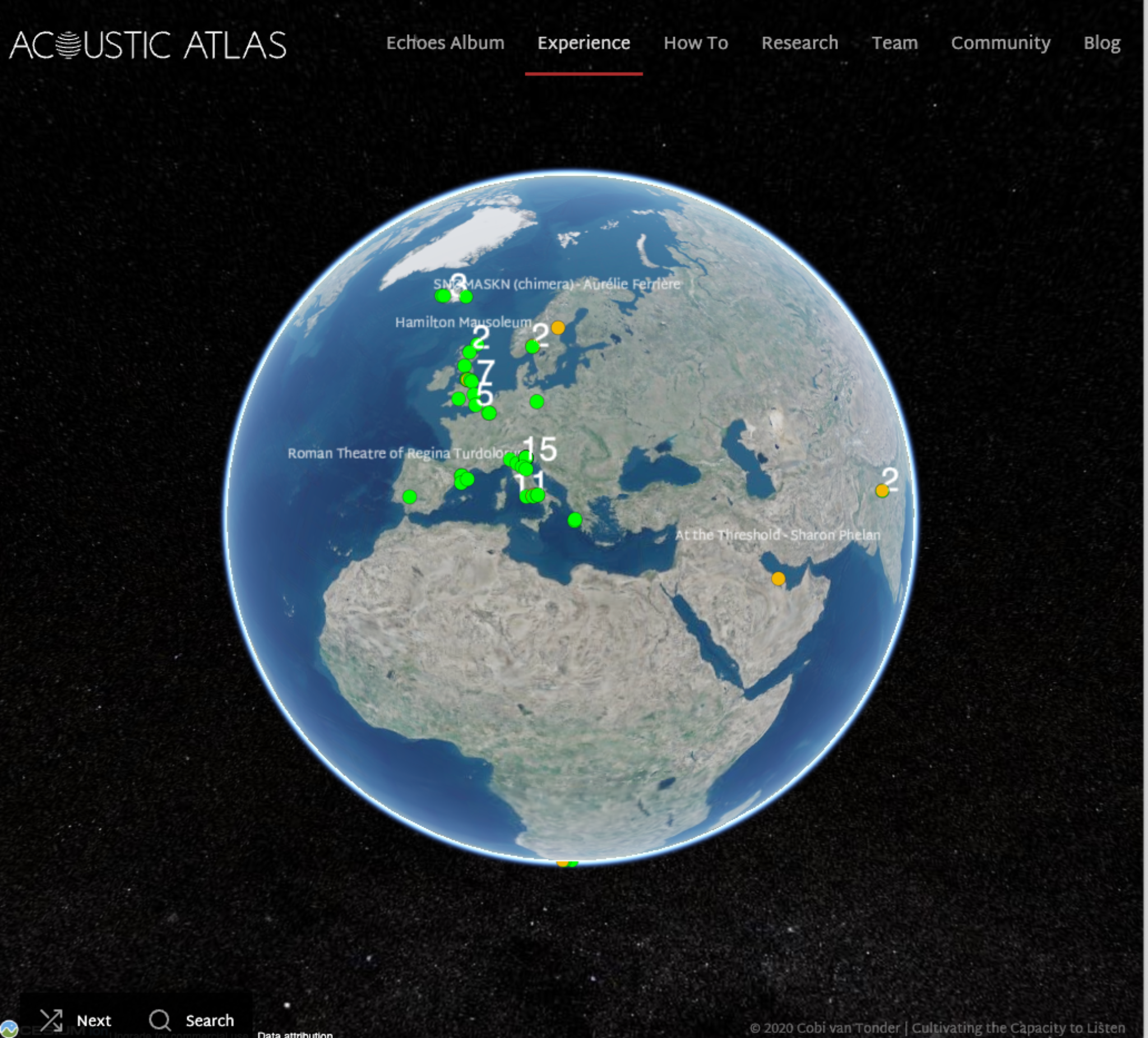
Acoustic Atlas is a virtual acoustic map dedicated to cultivating the capacity to listen to and connect with remote heritage sites. It invites people to sing, speak, and emit sound into virtual acoustic environments, experiencing how their voices — acting as human sonar signals — reveal the hidden interiors, forms, and textures of architectural and natural heritage spaces.
This mode of listening enables a phenomenological connection with remote sites, one that becomes particularly relevant for the preservation of heritage and for sonic exploration. Within the context of acoustical and environmental intangible heritage, virtual reconstructions of world heritage sites are increasingly valuable for enabling multi-sensory immersive access, research, and conservation.
The sonic component of a virtual reconstruction is known as auralisation — the process of rendering space audible. Auralisations are used to simulate ancient and historic environments in order to explore the likelihood and nature of rituals, social practices, and historical actions that may have taken place within them, as well as to study how sites may have changed acoustically over time.
Acoustic Atlas aims to digitally preserve the acoustics and soundscapes of natural and cultural world heritage sites. Its innovative approach makes endangered acoustic heritage widely accessible, while generating environmental, educational, conservation, and artistic value. The platform fosters collaboration between international researchers and sound artists working in the field of heritage acoustics.
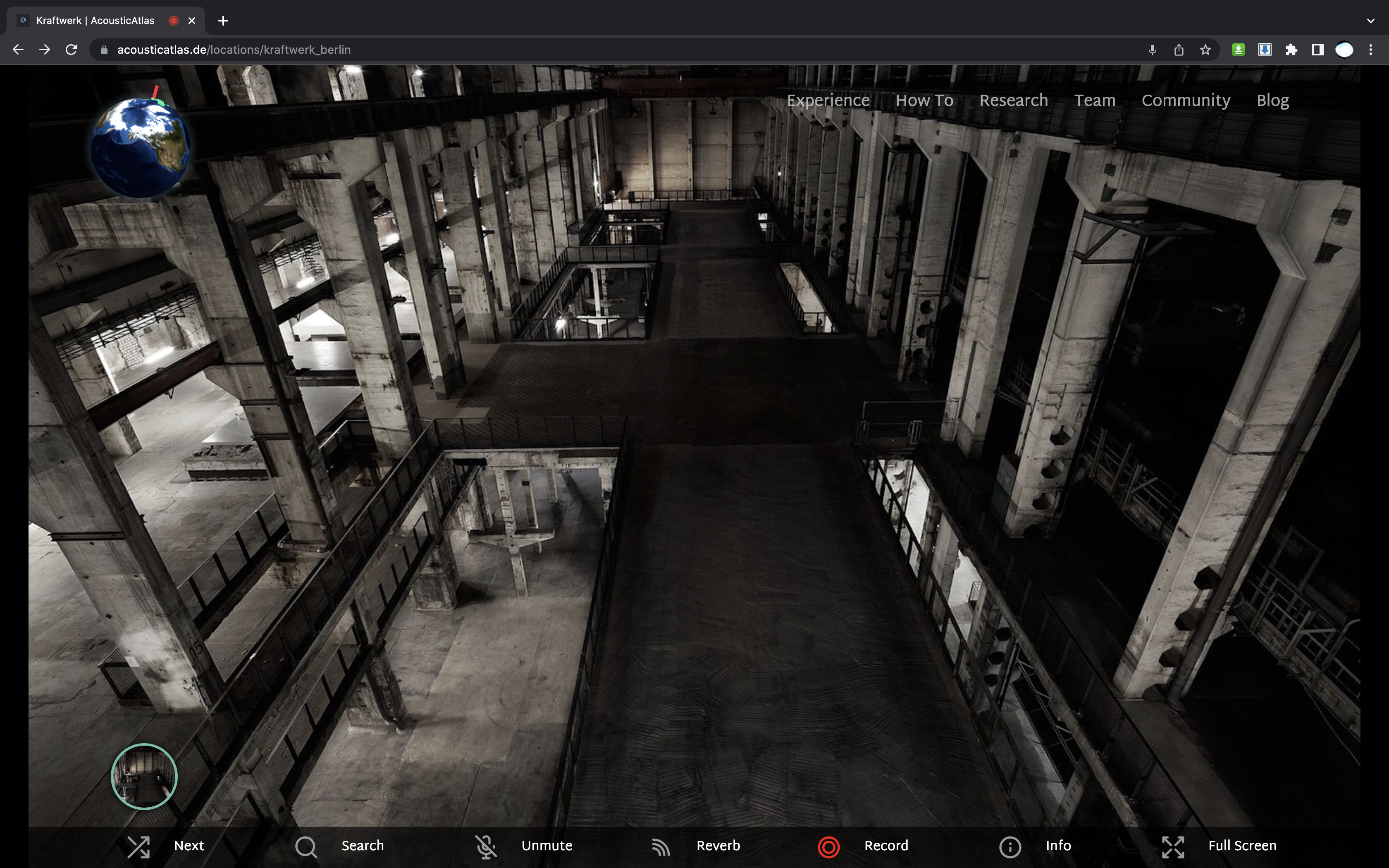
The online Web Audio platform allows Acoustic Atlas to run on most computers and mobile devices, utilising built-in microphones and headphones to transport visitors into selected heritage sites via live audio input. Participants can interact directly with an acoustic simulation of a site from a first-person perspective of listening.
By clicking on an image of a location, users can control various sonic parameters while singing or projecting sound in real time into the virtual environment. Through this interaction, reverberations, resonances, and echoes become audible — allowing the site to be experienced in an immediate, embodied, and sensory way.
Visit the platform here (or click the image above):
https://www.acousticatlas.de